Thursday, July 9, 2020

Screaming into the Wind...

July, 9 2020. 


Lives are Expendable


Catching the Virus

"There's no question that children are going to catch the virus. The question is whether or not it's going to tax our health resources, or it's going to be something that's going to cause someone else to get sick. And I think we can control for both those things without requiring every child in the state of North Carolina to either distance learn or show up every third day." These remarks were made by Senator Phil Berger who is the North Carolina Senate President Pro Temp to WRAL after he chose to table a bill that focused on the opening of public schools in North Carolina. Essentially he is saying that children will get the virus if they go back to school, but it is not determined if they will pass it to others in the school building. His comment is absolutely and categorically wrong. If and when a child contracts COVID-19 he/she/them will absolutely pass the virus to other classmates as well as staff members at the school. According to the CDC, "the virus that causes COVID-19 is spreading very easily and sustainably between people" (cdc.gov 2020); therefore, the callous remarks made by Senator Berger are categorically incorrect. Children will get sick, teachers will get sick, administrators will get sick, bus drivers will get sick, the custodial staff will get sick, but let us throw everyone back into school because our "health resources" will not be taxed when all these people are stricken with COVID-19 and/or other viruses that float around a school during any given year. Once again, Senator Berger is wrong in his assumption that health resources will not be taxed due to a rise in cases. According to Engel-Smith of NorthCarolinaHealthNews.org, if the virus continues to spike as it did in June and early July the hospitals in North Carolina's major metro areas will be highly taxed. Therefore to assume and even state that the state's health resources will be able to handle the onslaught of new cases when children and adults are thrust together in close quarters is absolutely untrue. The hidden message in Senator Berger's rhetoric is that a recovering and thriving economy is more important than the human lives who enter a public school. 

A Sound, Basic Education

In order to supply a sound and basic education to the students of North Carolina's K-12 public
education system, which is a provision required by the state constitution, "state leaders say they need lawmakers to provide an additional $427 million this year" (NewsandObserver.com 2020). $427 million is what is required for just the basics in North Carolina. It does not take into account the extra funding that will be needed to supply staff and students with personal protective equipment (PPE), hand sanitizer, cleaning wipes, and other essentials that will be needed to maintain a clean environment in each school. This increase in funding also does not take into consideration how each school will be afforded a nurse who could possibly be overrun with varying levels of illness and a counselor who may need to console students who have lost loved ones during this pandemic. When faced with how North Carolina will meet its constitutional obligation, which has been argued and proven necessary by the North Carolina Supreme Court in the Leandro case, Senator Berger's response is "we cannot spend money we don't have" (NewsandObserver.com 2020), and this is for simply the basic requirement. Berger has also stated when asked about the Leandro case that "Our constitution does not provide for judges to appropriate dollars. We've said on multiple occasions that if judges want to get into the field of appropriating, they need to run for the legislature" (NewsandObserver.com 2020) This callous statement continues to show Berger's disdain for the public education system and passing the blame onto a Supreme Court judge whose only fault is writing an opinion that upholds the education funding requirement written into the state constitution even when funding is tight. 

It is true that the economy in North Carolina has taken a beating due to "Stay at Home" orders and other measures enacted by Governor Cooper that shut down businesses during the month of March and some of April, but the old adage of "you must do more with less" has permeated through the North Carolina educational system for over a decade. Now it is faced with returning to in-person instruction while cases of COVID-19 continue to rise in the state with limited funds to provide for a "sound basic education" and no funds to provide for an education that is safe from an invisible threat that does not discriminate.  

For the Greater Good

"A Calling"

Many Christian denominations refer to the choice to enter the pulpit as a calling. Ministers are called by God to be the leading teacher and counselor for their parishioners during times of crisis, throughout the liturgical year, and during times of joy. This religiously laced verbiage is also what some use when referring to educators. In many speeches that espouses the value of educators, the speaker often references how educators are called into an altruistic profession, much like a minister, because something inside of them said that they must minister and educate children for the greater good of society. This calling has led many teachers to use their bodies as human shields. This calling has forced many educators to live off of social food assistance for their families because their salary barely covers the monthly bills. This calling has created a fear of authority and challenging leadership because doing so might cost them their job and would exorcise the profession they love so dearly. Politicians feed on this fear. This requirement to return to in-person school effective August 17 is counting on this fear. At what time do teachers rise up collectively and say, "No more." The health of children and teachers should no longer be used as pawns in a political game that threatens to strip funding if the demands of a complete return are not met. No calling should be worth sacrificing your health each and every day you go to your chosen profession. 

What Do I Miss?


While this post may be seen as screaming into the wind and callous, I must state one absolute truth: I do miss seeing my students each day, I miss seeing lightbulb moments in the classroom, I miss being able to cultivate relationships that only occur in person, I miss my athletes and coaching them toward success. I miss all the positive interactions that occur within a given school day. BUT, my family, both comprised of educators, has been cautious during this pandemic. We have sheltered in place, we have limited our social interaction, we have done what the CDC and state officials have said are effective in limiting the spread of COVID-19. Therefore the question must be asked, "If NC is still in Phase Two of Reopening which limits the gathering of people to no more than ten people indoors, how can one teacher with a class of thirty plus students in a poorly ventilated room be allowed at this point?" Again, I miss my students and my student-athletes and I do think I was called into education; I accepted a full scholarship when I was eighteen that was contingent on teaching four years in the North Carolina public school system. I have fulfilled that obligation at least thrice over and there are many things about education that can be frustrating and lead to fear, but I have always been able to soldier on until now. This year I fear going back to work. I fear that school staff and students are being forced into a social and biological experiment that could have dreadful consequences, which is why I, and others, believe that, based on the rising numbers in North Carolina, the state and local school boards should not fully open schools despite what law current law states, regardless of Senator Berger's sentiments. The time for true civil-disobedience has arisen. Hopefully, as I scream into the wind, someone hears; and, hopefully, we can all one day in the near future safely return to school without the looming fear the exists each day during this pandemic; until then, I pray that my students stay safe, stay healthy, and that the leaders listen to science and work to keep everyone safe and assured. 


Tuesday, March 4, 2014

Moving Beyond the "Shame Game"


Shame.  A topic that make everyone squirm in their seats.  It is this educators belief that shame has governed the public education system for the past decade, and possibly since its beginnings.  Dr. Brene Brown is a professor and her qualitative research has focused on shame and vulnerability.  She states that our "shame gremlins" hijack us when we feel shame and we are unable to make conscious decisions due to these "gremlins".

Let's put this idea of the brain being hijacked in context.  We will work from a broad base and begin to drill down.

To begin with, the State of North Carolina has increased the demands on educators, yet has not increased wages nor support for professional development.  Educators constantly hear how they are valued and do the most important job, but do not receive the compensation for this work that is important.  Instead, they watch the North Carolina General Assembly (NCGA) continuing to strip rights from a contract that was believed to be a sacred cow agreement.  The most recent rights that have been stripped are a raise in pay for having an advanced degree and career status, more commonly known as tenure.  Stripping tenure essentially means an educator can be removed with little to no documentation: due process.  The NCGA has created a new contract that will increase compensation for on 25% of the best teachers, an idea left up to the local school boards to determine who is considered the "best".  This idea creates competition and not collaboration.  The idea of who is the best has been centered highly around educator's EVAAS score.  If students do not score well on standardized tests the teacher may not be eligible to be a part of the 25% and his/her evaluation score is greatly affected.  Basing an a person's self-worth on his/her students' scores on given test day most certainly is a way of shaming that educator.

Secondly, most professional development is centered around the Achievement Gap and delivered through a top-down model.  Educators should be working and researching collaboratively to create interventions and best practices instead of sitting in a large room having the administration run down the top thirty best practices practices that should be utilized in the classroom.  This type of professional development devalues the teacher's knowledge and craft.  This is once again shaming teachers and continuing to reinforce the hidden curriculum that "those who can do and those who can't teach".  A statement that should never be allowed to be uttered due to the immense shame behind it!

Dufour, Dufour and Eaker believe that the best way to create a thriving educational environment is to first trust teachers to collaborate and create robust lessons based on action research.  Teachers will identify an issue facing the students in their classrooms and through analyzing the data create PLC model relies on teachers being leaders in the school and the district.  It also places value on the teachers' collective knowledge and skill sets.  This in turn lets the teachers know that they are "good enough"(as Brown states) and trusted to be leaders.
interventions to remedy the problem.  If the intervention is successful, it then should be shared throughout the school; teacher-to-teacher.


It seems that the "shame game" has reached its peak in education.  It is time for all educators to take back their classrooms because they are "enough", despite current political sentiment.  The one
underlying subtext in a teacher's makeup is altruism.  They do it because they know it is the right thing to do.  They have been belittled, devalued and undermined yet still continue to work for the results on high-stakes tests and beyond.  Have educators been so shamed that they are unwilling to stand up for what they know is right, not just because their instincts tell them, rather the fact research has stated individuality in education has failed and collaboration is a necessity!  Some groups have vehemently spoken up and spoken out for what is right in education, teachers are leaving the profession daily, but still educators have yet to unite collectively for what they know is right and just; they live... we live shamed and buy into that shame!  It is time to break out of the shame, own the research and stand up because as educators we are "good enough" and have value!

Wednesday, August 28, 2013

First Day of School: Talking Back to Harry Wong

First Day of School: Talking Back to Harry Wong

Why relationships rather than rules are important.  Moving from "teacher-centered" to "student-centered": A Band Teacher's prospective. 

Wednesday, August 14, 2013

School Improvement Plans and Covey's 7 Habits

A school improvement plan (SIP) is a four year map of how a school will work to increase its overall performance in specific areas.  Usually these areas are tightly focused around the End of Year testing data associated with math or reading.  Most school improvement plans take the data from the tests and create what seems to be an arbitrary number on how they will increase their composite score over a four year period; thus not be labeled a "priority school" which is simply a fancy term for failing school.

Most SIPs have at least three different goals.  One tied primarily to the tested academic area of the greatest need.  The other tied to the overall composite score for the school, and the final tied to character development.  These goals are supposed to be achieved be creating SMART goals.  Herein lies a question, how is an organization supposed to achieve greatness and overcome the pressures facing them from mandated legislation such as NCLB and the Race to the Top Grant when they must work on three different goals in concert with one another?


The Answer...

IT CAN'T!!  No organization can be effective and put 100% focus on four different goals.  When former Apple CEO Steve Jobs returned and reinvigorated the company he stated that Apple would do one thing, and do that thing very well.  Before Jobs era 2.0, Apple was making printers, computers, software and other peripherals.  The stock had plummeted and what had made Apple "insanely great" to begin with had been lost.  Jobs returned and refocused Apple towards its core.  (Pun intended.)  He challenged the company to "Think Different".  This process was painfully slow, but to this day no one can state that their lives have not been affected by Jobs's resurgence in some way.

As an organization, the school creates the SMART goals, that usually are not measurable and recycled from former plans, and expect scores to increase and the focused academic goal to show improvement.  In some cases, when the faculty truly drills down and does the necessary research and sets up the necessary programs for the particular school in question at least one to two of the goals is marginally achieved.  But, to be "insanely great" as Jobs inspired those at Apple to be and do there was buy-in from his employees at Apple as well as the consumer base.  Who are the consumers at a school?  The students!  The students must buy-in to the SIP and take ownership of the goals set forth; otherwise it stays an ethereal document that is simply dusted off and updated every four years. 

How can the students truly buy-in to the plan?  The students must take responsibility for their learning!  A true Professional Learning Community (PLC) has a mission, vision and main goal it will achieve; often each faculty member has his/her own mission and vision aligned with that of the PLC.  Why not have the students do the same? 

Stephen Covey and Students

Students must learn how to create a mission, vision and plan for themselves.  One school in Wake County works with their students to create an environment where the teachers and students utilize Covey's 7 Habits of Highly Effective People to generate student buy-in.  Each day the students create daily goals and propose how they will achieve each goal.  At the end of the day, the student evaluates how he/she did and whether or not his/her goal was achieved.  This creates data points for both the student and the teacher each day.  With this amount of student generated data as well as data generated by formal and summative assessments the faculty can truly drill down on the primary goals in the SIP.  It is as if each day utilizing Covey's outline the students are creating mini-SIPs for themselves.  The students work with a program called The Leader in Me and therefore not only become students as consumers, but collaborators and partners in the SIP process.  It is interesting to note that before this school utilized this program that it was head towards being a "priority school".  

The innovation of this one school can shine a light to others.  There are other programs that emulate The Leader in Me such as The Responsive Classroom, but again the idea is to create students who are not simply dependent on the teacher to facilitate and be the sage of all knowledge.  The goal is to create student collaborators working interdependently on their own goals along with those of the SIP.  Therefore, taking the lead of the transformative school in Wake County, schools should open up their SIP and let students see what is inside of what could become an esoteric document and have them work interdependently and own the goal that they see themselves being able to accomplish.  (Remember, what is the one thing that will make us "insanely great"?)  With all persons engaged, collecting daily data and focused on their one goal the SIP should and will be completely achievable.


Saturday, October 20, 2012

Who's in Your PLN?!?

Social media has become quite the norm in everyday life.  How many times a day does a person check his or her Facebook status?  How many times a day do people tweet what is happening or update their Facebook status?  It is likely that most people can pinpoint what their friends are doing, where they are and who they are with by simply opening an app on their mobile devices or checking in on their computers.

Herein lies the question?  Who is in your PLN?  First the acronym, like all other acronyms in educational jargon must be defined.  A PLN is a Professional Learning Network.  The term is a spinoff of the Professional Learning Community (PLC) that has become a mainstay in educational jargon and is based on the research of Dufour, Dufour and Eaker.  But, the PLN broadens the educator's professional horizon beyond the school.  The PLN is a network of educators connected through social media sharing best practices and ideas that have improved student learning.

Currently, the PLN is most utilized on Twitter because Facebook has become more of a real-time photo album or public journal for people to share with longtime friends, family and acquaintances.  Twitter is more impersonal.  On Twitter, one can follow politicians, comedians, celebrities, athletes as well as educators across the globe!  Often times, educators on Twitter have never met in person, but simply link to each other by viewing a hashtag (#) that has been created to categorize the subjects of specific tweets.  After finding the education based hashtag, the educator can choose to follow and friend as many fellow "Tweachers" as possible.  There is no magic number, but a blog by Steven W. Anderson, a technology specialist with the Winston-Salem Forsyth County Schools, provides an excellent beginners "How To".

As Mr. Anderson states, creating a PLN can be a bit of trial and error.  Twitter is also not the only resource an educator can utilize to create a PLN, but it is a start.  Blogs, similar to this one, can also provide insights on how to best utilize the ever-changing landscape of digital education.  One rule of thumb is to start with a small group of followers that may be focused on your educational interests or subject matter and then expand based on how the conversation progresses.

Follow Me @tricorbin
Social media has changed the way we communicate.  It has changed the way our students learn.  And, it can be a powerful ally for professional development.  So, take the plunge and join your fellow Tweachers and create your own PLN.

Monday, July 16, 2012

Opening a Closed System... Alternatives

As I venture through my graduate work, I am finding many of my past paradigms are being challenged.  One of the most interesting changes in my thoughts have been on how people can enter the teaching profession.  If you had asked me about two years ago, I would have told you that only people go through an accredited four year training program are truly effective educators.  I stood staunchly against lateral entry programs and other alternative programs like Teach for America.  Now, having worked with people who have been certified through alternative tracks and seeing how they are incredibly effective educators, I have had a complete paradigm shift.
Rep. John Faircloth

Back in February, the Guilford County Association of Educators hosted a Legislative Breakfast for state and local politicians.  I spoke at length with Representative Faircloth about teacher certification programs.  He referred to the teacher certification program as a formally closed system.  After he retired from his businesses, he wanted to go into the teaching profession as a Career and Technical educator, but he could not get a position due to the fact he was not certified through a four year institution.  Finally, he was able to acquire a position at UNCG teaching in the Bryan School of Business.  While at Bryan, he worked as an instructor and with students working towards their undergrad and graduate degrees in business.  Rep. Faircloth was a successful businessperson in the private sector and it would have been interesting to see how he would have imparted his experience to students at the high school level.  The only issue was that at the time he wanted to enter K-12 public education, there was not an alternative route.

Enter North Carolina Senate Bill 1115.  This bill required universities, school systems and community colleges to develop alternative licensure programs.  One could deduce that SB 1115 opened. the doors for programs such as Teach for America, an alternative licensure program that was born of the floor of an apartment and has had a positive impact on rural and urban hard to staff schools across America.  After the passage of SB 1115, persons from the private and public sector could enter public education by going through these alternative licensure programs.  Initially resistant, I began to see teachers who possessed untraditional and innovative methods.  They became leaders in the school using their unique experiences to innovate and seek out interesting opportunities for the students and schools.

Therefore, after much internal reflection and public debate at a national level on the floor of the NEA-RA, I have concluded that through support and mentoring lateral entry teachers can and are just, and even more effective, at times than their traditionally certified counterparts.  I am not saying that the traditional process be shoved under the carpet by any means, but I am asking what is the traditional method lacking at present?  Especially with the large focus of education moving towards a STEM model, how does the traditional model best prepare future educators to work in an inquiry-based environment?  I will say that one of the original alternative licensure programs located in Guilford County continues to produce highly effective lateral entry educators, perhaps if traditional institutions would look into the methods employed by GCS-ACT and Teach for America the persons playing the political game with education would consider it to be opening to unending possibilities of change?


Thursday, July 5, 2012

Do we still need a Union?

I must first begin stating that in some way shape and form I have been a highly active member of my state and local association.  I currently serve on the Board of Directors at the state level. But, as I have started on my path towards becoming an administrator I have begun to find myself questioning the motives of the union.  There is a constant outcry from the NEA and the state association over the reformers who may be wishing to privatize education, institute vouchers and expand the reach of charter schools.  Another sacred cow that has come under attack in recent years is teacher tenure.

North Carolina is a right to work state and teachers are the only professionals who work a certain number of years and then are deemed untouchable.  This is not entirely true, a teacher who has tenure can be released, but after extensive paperwork and investigation.  Let me be clear, I am not calling for the willy-nilly firing of educators, but I am saying that human resources and administrators should have the ability to release an educator if he/she is not meeting performance expectations without having to cut through massive amounts of red tape.

NEA President Dennis Van Roekel
Back to the point at hand, does the education profession still need a union?  What, honestly is the actual purpose of the union?  According to NEA President Dennis Van Roekel, we are essential towards developing a stronger profession.  Recently, NEA developed a 3-Point plan for positive reform.  This plan is the first actual step that focuses the NEA on enhancing education.  Before this plan, many could attest that the job of the NEA was to only protect its members despite its vision of "Great Public Schools for Every Child".


This is an issue I personally have been struggling with.  On the state level, the association seems to reacting instead of leading.  The General Assembly will write a bill and NCAE with react because it strikes a blow at one of our sacred cows that we have become comfortable having; be it tenure, longevity or advanced degree pay.  I have yet to see NCAE produce any point plan that states how they will enhance education reform in North Carolina.  All too often, it seems like the association is rallying against the General Assembly fighting for educators' jobs and not attempting to define how we will lead education in the 21st Century.  


This leaves me at an empasse.  We have been working towards building schools that work as collective organisms working as Professional Learning Communities (PLC), and yet have standards and assessments that could have been created by persons who know nothing about authentic learning and assessments.  Therefore, it places education in the hotbed of a politically infused system.  


This is why I am left perplexed.  I am working in a school that is attempting to integrate and become a full-fledged PLC and attempting to break the traditionally fragmented and lone ranger vision of the teaching profession.  Yet, the collective voice that I choose to pay dues to seems to be lacking in the vision of how we will lead the profession.  It has provided excellent professional development for developing better teaching practices, but does not have a clear, defined vision of a "Great Public School for Every Child".  


There has been a mass exodus from the union over the past ten years because of various reasons.  This exodus has caused political players to question NEA's relevance in today's political arena. 


Could this be the new NEA?
 I suppose the conclusion I have reached is that educators should work collectively as one voice, but the guise of a "Great Public School for Every Child" should be back up with a true plan.  We should also be willing to reevaluate our once entitled sacred cows if we are to move education forward in the 21st Century.  This may be a complete reframing and restructuring of the association and a hardline look at what we, as an association value, and stick by that instead of saying one thing and really focusing only on the dollars and cents of health care plans and salary.  (This is not to say that there is not a need to completely restore the epic cuts to public education.)  But, if I am to continue willing give my money to my professional organization I want to see an A-B-C plan that completely lays out the Five W's of our educational reform policy instead of simply waving slogans around, reacting to negative policies and lashing out at those who strive to silence us.  In other words, give those people a reason to listen to the association again.  Otherwise, there will be no union or need for a union.  It will continue to be the child placed in the corner of the room due to his inability to work cooperatively with others.


Wednesday, June 20, 2012

We're All Wrong and Its OK!


We have all had that one class where we simply cannot figure out the material.  It is as if the professor or teacher is simply speaking another language.  We study as best we can for the test or write what we think to be our most prolific term paper and it comes back looking like this: 

From that moment on we have labeled ourselves as a failure!  Our teachers and classmates begin to view us as the troublemaker or lazy student because for some reason or another we cannot produce passing results.  This paradigm, simply put, is an absolute tragedy!  The system has created a student who now believes that they are a failure and do not understand that it is actually a wonderful opportunity.  Education has also created a system where students care more about the grade and less about the process of learning.  What we have forgotten is that failure is absolutely 100% OK!  In fact, there is a saying among the acting community that states fail and FAIL BIG!


Why is it so important that we must feel as if we are always right?  It seems as if everyone is clamoring with the right idea for how to reform education.  What if the right idea is to create an environment where students can be free to fail without feeling like they are less than?  Wasn't it Thomas Edison who said, "I have not failed. I have just found 1000 ways that won't work."  The irony is that we have created an educational culture that has to be always right!

It is time for educational leaders to look into what students can learn from being wrong.  Real learning happens when we allow students to boldly fail and be OK in the failure.  Once students are comfortable with failure true growth will happen.  What is being wrong?  It is knowing that we live in a world of ever-changing uncertainties and that it is better to know that growth will occur when we allow ourselves and our students to be wrong instead of living in the fear of always having to be right!


DomainDouglas: Summer Geekdom

DomainDouglas: Summer Geekdom: The students and faculty have left the hallways silent and still.  Occasionally the phone rings, but I am not even in my office to hear it.

Thursday, June 14, 2012

Education Then and Now...Changing Paradigms.

Factory Work
American education has been based on the factory model.  Students would enter school around the age of 5 and would be grouped together simply by age.  Throughout their educational journey, these students would learn basic reading, writing, and mathematical skills that would best suit them to work along a factory line.  The raising of standards in public education has seen an increase in standardized testing.  Simply put, standardized testing is creating a module that evaluates all students on the same level.  This assists students in the Henry Ford model of education because they learn how to properly bubble in the "best answer" to a basic question.  Let me be very clear before continuing with this line of thought, in no way shape, shape or form am I stating that there is not a need for factories or the men and women that work within them.  I am simply stating that in today's fast paced world students need to be able to think more individually within the collective versus thinking only as a collective.
Factory Prep


Enter 21st Century Education


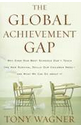
The 21st education movement has been touted since the late 1990's and now it is 2012 and we are still trying to grasp what 21st education looks like.  One constant all the research agrees on is that it must focus on ingenuity, collaboration and critical thinking.  Dr. Tony Wagner a professor in education at Harvard University recently wrote about the gap between America and the rest of the world when it came to education.  His book is entitled The Global Achievement Gap.  Dr. Wagner has 7 skills that he has developed through extensive research and discussions with cooperate CEOs. 
Wagner discovered that student do need a base of knowledge, but CEOs are looking for his "7 Survival Skills".

The 7 Survival Skills
  • Critical Thinking and Problem Solving
  • Collaboration across networks and Leading by Influence
  • Agility and Adaptability
  • Initiative and Ingenuity 
  • Effective Oral and Written Communication
  • Accessing and Analyzing Information
  • Curiosity and Imagination
The challenge to educators is how will we move from teaching in a standardized model towards a collaborative, creative model.  Today's world has not become "how much do you know?" but rather "what can you do with the information you find?".  There are several new modules and modalities being created in the classroom that are attempting to tackle the challenges of the 21st Century student and workforce, they work towards helping students better utilize the 7 Survival Skills, but currently education is play catch up with the ever changing world.


Sunday, June 10, 2012

Against All Odds


The reform movement that has swept the nation has left many educators in the classroom grasping for straws.  The nation has been digging itself out of the largest financial crisis since the Great Depression and there just seems to be no money left.  State budgets have been balanced on the backs of public education for the past several years.  Educators have been asked to do more with less each year.  The federal government provided one time relief in 2010 with the EduJobs Act.  Many state governments and local education agencies took this money and spread it out over the past two years.  Now the EduJobs well has run dry and once again state governments are forced to make drastic cuts in order to balance their budgets.  


In North Carolina, and across the country, partisan politics have left all children behind.  Currently, North Carolina ranks in the low 40s in per pupil spending; it is now behind Mississppi!  Last year, Governor Perdue wanted to extended the penny sales tax in order to restore the cuts to education, but the newly elected GOP General Assembly stated that no taxes would be extended.  This year Gov. Perdue proposed a 3/4 of a penny sales tax to restore the cuts, but again partisan politics won over education.


Year after year, educators have been asked to do more with less.  As the years pass it seems as if educators have been blamed for the financial crisis that has crippled the economy.  Year after year, students still enter schoolhouses believing that someone will be there to steward their futures. 


Over the past several weeks, high schools across the country have celebrated their graduation ceremonies.  Students have been paraded in front of friends and families celebrating thirteen years of a system that hopefully prepared them for the coming obstacles.  These newly minted graduates looked to their haggard educators to consistently hit home-runs for them.  They counted on their teachers to prepare them for the Flat World they are now entering.  State governments have let them down pandering to special interests, but their teachers daily struggled to prepare them for success.  As the class of 2012 exits and the class of 2013 begins their march towards the future educators are now in the bottom of the ninth with two strikes and can barely hold onto their bats, but know that they must continue to produce magic because the each student is counting on them despite the lack of funding provided.  Will they once again hit one out of the park?


Friday, June 8, 2012

The Educational Reformation

There are periods throughout history where we as a people know that what we are doing and what we have done is no longer in alignment with our core values and beliefs.  This was true during the mid to late 1500's when priests and theologians broke away from the Roman Catholic Church.  The Roman Catholic Church during this time was not only an entity where people chose to worship and celebrate their faith, but it was a larger political body that enforced what some believed were unjust laws in order to keep people continually indebted to the church.  Bishops, Cardinals and the Pope himself all possessed great amounts of political clout and would force the commoner to release their earnings so that he might gain favor in the eyes of God.  Certain members of the church saw threw the corruption and political pandering and chose to break away.  Perhaps the most popular member of the reformation is monk Martin Luther who nailed his tenants of faith to the door of the monastery after denouncing the Roman Catholic Church.  As a member of the Presbyterian Church (USA), I am more inclined to follow the teachings, or pillars of Calvinism.  We, as Presbyterians, hold at the very core of our belief structure, as Calvin did, that we are the church always reforming and never stagnant.  It is our mission to constantly grow and challenge what we believe and how our faith will continue to grow.


Jumping ahead nearly 500 years later we find ourselves at the beginnings of another politically charged reformation: "The Educational Reformation".  For nearly a decade education has be inundated with the reform to the Elementary and Secondary Education Act (ESEA) that is now known as No Child Left Behind (NCLB).  ESEA was signed into law by President Lyndon B. Johnson because he fully believed that every American citizen should have the right to an education.  ESEA gave state governments autonomy over the school's in their states.  During the late 1970's and early 1980's a decline in student achievement and graduation had been occurring.  The Department of Education began a task force that published A Nation at Risk that clearly stated what measures where needed to raise the achievement of students.  Many educational leaders today continue to reference this report as the template for true educational reform.  


Enter: No Child Left Behind, or Every Test Dumbed Down.  Thus began the standards movement in America.  Students would take a standardized "High Stakes" test in order to show achievement and schools would be rated by these tests.  The kicker is that these tests are cheap to produce and students have to learn a narrow curriculum and merely be able to bubble in the correct answer.  This has passed for critical thinking.  


The system has subsisted off of this mockery for over a decade and we not seeing gains in achievement, but schools that have been labeled as failing.  When a school is labeled failing for more than three years it is put on a turnaround plan.  Essentially the administration is fired along with about 50% of the staff.  The staff can reapply for their jobs, but most do not and seek out other schools or even systems to work.  The irony is that this is considered reform; but in truth it is... well corporate reform.  This model is similar to the model used by the once giant in electronics Circuit City and we all know how successful that plan worked.


The old statement, "It is too big to fail" blindsided Circuit City and it currently laughing in the face of the educational system.  Once again the answer does lie how much money is the nation willing to spend?  Is the nation ready to do the real work and focus on a system that is constantly in need of reformation? Is education system in American truly in a state of disrepair?  


Contrary to what certain news outlets have been clamoring, I do not think the system is beyond repair.   As stated in the picture of John Calvin, "Unconditional Change".  I do believe it is going to force us all to change our educational paradigms that we have developed over nearly a hundred years and it will take a great deal of collaboration on all sides to reform an ever reforming system. There are reformers who are beginning to unlock the key to what education has been and what it will be.  They are not afraid to trample on the sacred cow of standardized tests.  One of my personal favorites is Sir Ken Robinson and his belief structure on education greatly matches my own core values during this educational reformation.


(http://www.youtube.com, 2012)